

You wake up in the morning, and your face looks a little puffy, with softer, less defined contours. Sound familiar? Today we look at why facial puffiness happens in the morning and what you can do about it. We will also cover important signs of facial swelling that should not be ignored.
Why Is the Face More Prone to Puffiness in the Morning?
Morning facial puffiness can be explained quite simply. During the day, we usually spend most of our time in an upright position. Because of this, the legs are more likely to become puffy by the evening, while the face usually does not.

While we sleep, however, we are in a horizontal position. In this position, fluid does not move downward in the same way; instead, it is distributed throughout the body, and some of it may be retained in the facial tissues. While we sleep, we barely move; that’s why some fluid can stay in the tissues of the face. Since facial skin is delicate, even a small amount of swelling becomes noticeable.
Salty snacks, alcohol, crying, or even sleeping in an awkward position can make that morning puffiness worse. That’s why you might wake up with puffy eyelids or under-eye bags. In many cases, it gradually improves within a few hours.
Note: This material discusses everyday morning puffiness. Facial swelling can also be linked to kidney problems or other health conditions, which require a different approach.
What Causes Facial Puffiness
We've already covered some of the reasons why the face may look puffy. Let's take a closer look at a few of them.
Sodium Intake with Salty Food
The sodium in salty food can cause your body to retain water. Some foods contain far more salt than you might think, for example, chips, cheese, fast food, and sausages, especially smoked ones. With such foods, it's easy to lose track of how much salt you actually consume.
Alcohol
Alcohol works in a different way. It can affect your body’s fluid balance, which may make morning puffiness more noticeable.
Lack of Sleep and an Awkward Sleeping Position
The position of the head and neck during sleep can also contribute to morning facial puffiness. Chronic sleep loss (in other words, sleep deprivation) can make it worse. Insufficient sleep may affect cortisol levels, and cortisol, in turn, helps regulate the body’s water and salt balance.
Lack of Movement and Physical Activity
The heart pumps blood through the blood vessels. Meanwhile, our lymphatic system doesn’t have a single pump like the circulatory one. So, it’s more difficult for it to move fluid. To do this, the lymphatic system needs to rely on the movement of the lymphatic vessels and your muscles. When you sit still all day long, puffiness may become more noticeable.
Hormonal Changes
The interplay of hormones is quite complex. To put it simply, hormonal balance shifts before menstruation and during menopause, which can show up as puffiness in the face, among other places.
Allergies and Other Medical Causes
Facial swelling isn’t always caused by everyday habits. Sometimes the reason is an allergy, new medications, or certain health conditions, such as hypothyroidism. It’s better to consult with your doctor in these cases. Also, call your doctor if there are any other additional symptoms, like sudden swelling, one that affects half of your face, or that sticks around.
How Does Fluid Retention in Facial Tissue Occur?
Facial fluid retention can happen when more fluid accumulates between the cells and the body can’t remove it quickly enough. Slower fluid drainage can contribute to morning facial puffiness. Usually, it’s symmetrical: noticeable on both sides. Within a few hours, it gradually subsides.
The Role of the Lymphatic System
The lymphatic system helps remove excess fluid from the spaces between cells. However, it can also be influenced by some of the factors listed above. Under their influence, fluid drainage may temporarily slow down.
What Signs May Accompany Slowed Fluid Drainage?
Look out for the following symptoms:
- A feeling of tightness in the facial skin;
- Regular puffiness in the morning;
- Your face looks less defined than it used to.
These signs aren’t a diagnosis, but they’re worth paying attention to.
Supporting Lymph Flow in the Face: Where to Start
To support the body’s natural fluid balance, start with lifestyle changes rather than cosmetic products. The following can be helpful:
- Moderate, manageable physical activity and more movement in general
- Rethinking eating habits and reducing salt
- Cutting back on harmful habits, especially alcohol
- Gentle facial massage (it can be combined with your morning skincare routine)
- Enough sleep
How to Reduce Facial Puffiness Naturally
You can influence your facial puffiness, making it less noticeable with time. Still, you have to count on your regular and consistent efforts to make it a “rare guest.” Every small change leads you to better results. Below, we will look at ways to reduce fluid retention in the facial tissues at home.
Drink enough water
It may sound surprising, but dehydration can sometimes make facial puffiness more noticeable. Simple tip: staying properly hydrated may help if you are prone to puffiness. Drink enough; do it every few hours; take small sips. Replace coffee and sugared tea with water or plain herbal tea.
Cut Back on Salt
For many people, salty food is something it’s hard to refuse. If you’re among them, try to cut it slightly. Do it slowly at your own pace: sometimes, replace salty snacks with healthier options.
Move a Little More
Physical activity supports the body’s natural circulation. You don’t need to go to the gym. If you are short on time, take a walk around the block or to the nearest park. If you don’t have the energy even for that, do some light stretching.
Cold as One of the Natural Ways to Reduce Facial Puffiness
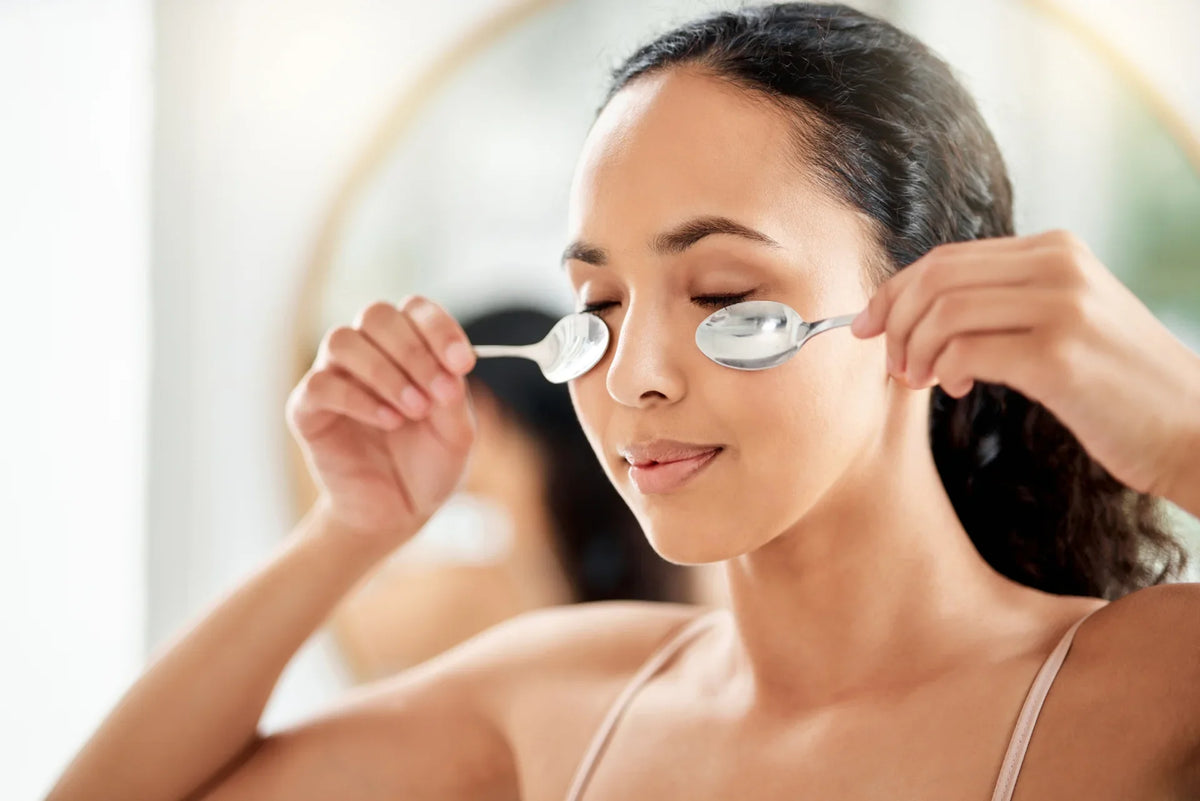
Cool temperatures can help refresh the skin and temporarily reduce the appearance of puffiness, so you can make cold part of your face care. You have two ways: wash your face with cool water and use chilled under-eye patches.
Facial Massage: How to Decrease Facial Puffiness
This can be a gentle way to make your face feel fresher and less puffy, but the key is to use light pressure. If your face feels puffy in the morning, use slow, smooth movements. It should never hurt.
What Is the Difference Between Medical and Cosmetic Massage?
The medical one is called manual lymphatic drainage. Only a trained professional can do it, if your doctor finds it useful in your case. The lymphatic drainage follows specific rules; that’s why the professionals who perform it must know a defined technique. It’s not something to repeat at home.
Meanwhile, the cosmetic massage is much simpler. Everyone can try it in their home skincare routine. Despite the fact that this type of massage isn’t a treatment, it can leave your skin feeling fresh and looking a bit more cared for.
How to Massage Your Face at Home
When you look for options to reduce facial puffiness quickly, you can try a massage as one of them. The best way is to ask your cosmetologist to show you how to repeat the basic movements at home. They can demonstrate them and ensure you can do it correctly. Now, we’ll learn the main principles to start face massage at home.
- Clean hands and face.
- Apply a small amount of serum or facial oil.
- Move slowly without rushing.
- Repeat each movement 5-10 times; move from top to bottom, from the center of your face outward.
Which Movements Can You Learn First?
| Facial Area | Application |
|---|---|
| Forehead | Stroke from between your eyebrows toward your temples. |
| Eye area | Glide from the inner corner of your eye to the outer one. |
| Cheeks | Gently stroke from your nose’ sides toward your temples. |
| Chin | Trace along your jawline from the chin outward with your thumb and index finger. |
| Neck | Gently stroke from your jaw to your collarbone. |
Facial Care: Beauty Technology to Complement Your Routine
In addition to the tips above, you can add beauty technology to your skincare. It doesn’t have to be done in the morning. If you are short on time, you can do these extra treatments whenever it suits you.
Clione Fit 2.0 for Facial Care at Home

The Clione Fit 2.0 device is one example of technology you can use at home. You can use it on your own, without outside help. Several technologies are combined in one device, including EMS, RF, MFIP, electroporation, and LED light therapy.
The manufacturer recommends using Clione Fit 2.0 two to three times a week, for 10 minutes per session. That’s easy to fit into a regular routine. The device is meant for cosmetic facial care only. It doesn’t address medical causes of swelling, but it can be a useful addition to your skincare at home.
Morning Routine to Decrease Facial Puffiness
Let’s imagine the situation. Let’s say you had poor sleep, then woke up with a puffy face and swollen eyelids, and you have to leave the house in an hour. Here’s a quick routine that can help you feel fresher.
Step 1: Drink Some Water
Prefer plain room-temperature water. You can add to it a slice of lemon or a couple of drops of lemon juice. Also, you can replace it with a cup of your favorite tea (warm, not hot). Anyway, a drink is a good way to start a day, as the body has had no fluids all night.
Step 2: Cool Your Face
Rinse your face with cool water and/or apply cooling under-eye patches. As we already discussed, coolness refreshes the skin. Just don’t put ice directly on your skin! If you want a cool compress, wrap the ice in a piece of cloth.
Step 3: Facial massage
Don’t knead your face randomly. Instead, follow lines from the center of the face toward the temples, from top to bottom. You can use a special oil or serum to make the movements smoother.
Step 4: Your usual routine
Now you can apply your usual nourishing or moisturizing cream, serum, and so on. Before leaving the house, don’t forget to apply facial SPF.
When You Should See a Doctor
These tips are for everyday, temporary morning facial puffiness, the kind that comes from a bad night’s sleep, what you ate, or not moving much. They don’t apply if there’s a medical cause behind it.
See a doctor promptly if:
- Swelling appears suddenly and keeps growing.
- Swelling affects only one half of the face.
- The swelling doesn’t decrease over the course of the day.
- You have not only puffiness but also itching, redness, pain in the swollen area, or a fever.
Important: Call an ambulance right away if you have trouble breathing or swallowing, or if your tongue or throat feels swollen.
If your face is puffy often, and not just in the morning, talk to your doctor. Do the same if your legs swell for no clear reason or if it started after you began a new medication. If a health condition is behind it, massage and skincare won’t be enough.
Pay attention to how you feel and take care of your health, because beauty is a pleasant “side effect” of feeling your best.


