

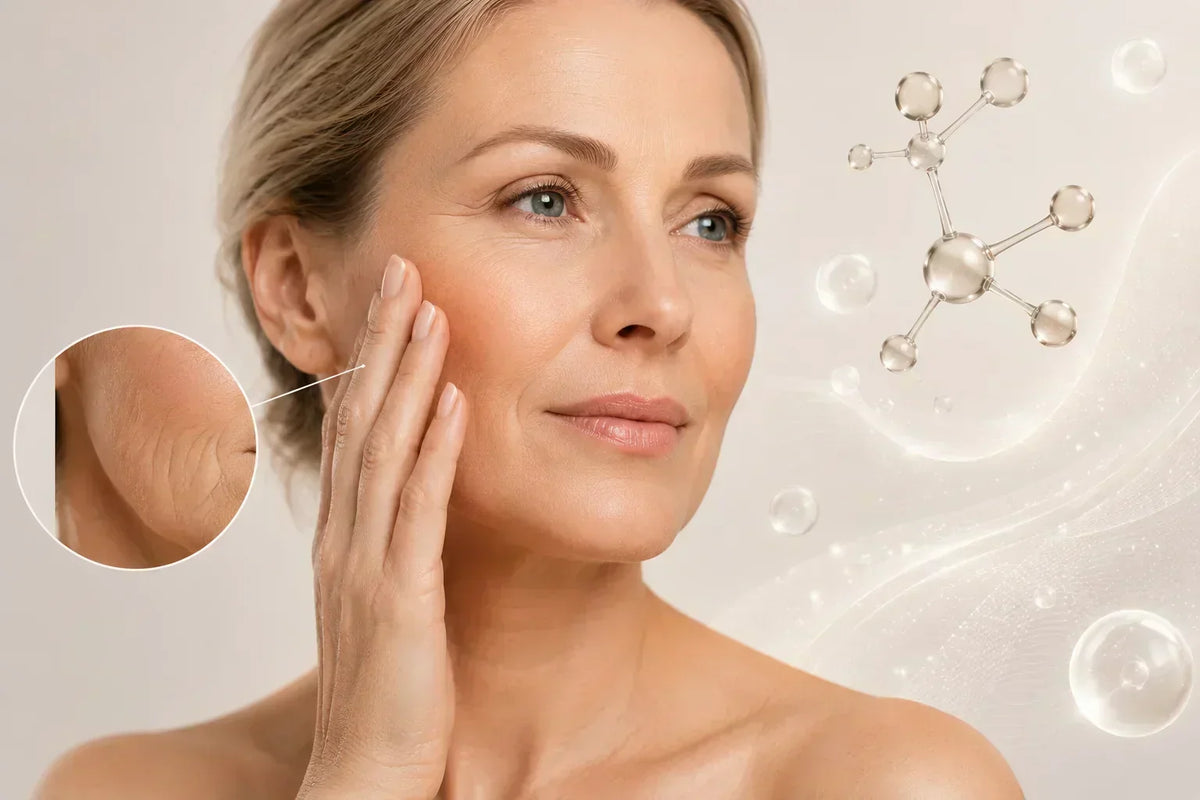
The cheeks are an area of the face we rarely think about controlling. We don't furrow them, raise them like eyebrows, or purse them like lips. Yet cheek wrinkles are far from rare. At first, they only appear after sleep. Later, you might notice that the jawline has become more "blurred." Sometimes folds on the cheeks show up even before wrinkles around the eyes. Let's figure out why this happens - and more importantly, what to do about it.
Why Cheek Wrinkles Appear
The main reason is that the mid-face condition depends on several factors at the same time: the quality of the collagen framework, the volume of subcutaneous fat, facial expression habits, and lifestyle. The appearance of the first cheek folds can be influenced by:
- chronic dehydration
- photoaging from sun exposure
- smoking and chronic stress
- the habit of sleeping on your stomach
- sharp fluctuations in weight
- impaired microcirculation
- lack of sleep
In youth, these factors seem insignificant. But over time, the body's natural collagen production declines - and as a result, facial skin becomes less resistant to deformation.
Wrinkles on Cheeks After Sleep: Normal or Cause for Concern?
Morning creases on the cheeks are common. When skin is sufficiently firm, they disappear within 5–10 minutes of waking up. In some cases, sleep folds linger for half an hour or longer. It isn't a reason to panic, but it is a clear signal that your basic skincare approach needs to be reconsidered and adapted to your skin's current needs. It's not yet a sign of premature aging - just a prompt to adjust the products and methods you use daily.
Cheek Wrinkles at a Young Age: Why Does This Happen?
If cheek wrinkles appear at a young age, there's usually a combination of several factors behind them:
- Oxidative stress. Free radicals - formed under the influence of stress, polluted air, or metabolic disruptions - contribute to the gradual breakdown of collagen fibers.
- Genetic predisposition. The rate at which skin ages, and the amount of collagen and elastin in the body, are partly determined by what nature has built in.
- Poorly chosen skincare. Overly aggressive products break down the skin's protective barrier, while routines lacking hydration and antioxidants leave skin without the "building blocks" it needs.
- Photoaging. Spending a lot of time outdoors without SPF, regularly visiting tanning beds, skiing (UV rays are active even in winter) - all of these take a toll. A few years ago, a photo originally posted in the “New England Journal of Medicine” went viral worldwide. It showed a truck driver whose left cheek - the one constantly exposed by the window - looked significantly more aged than the right side.
Why Deep Cheek Wrinkles Appear
Sagging cheeks and deep wrinkles are usually less about skin quality and more about changes in facial anatomy. Here's what happens:
- Cheek volume is lost as fat tissue decreases.
- Fat pads shift downward under the pull of gravity.
- Bone density declines, gradually altering the overall contours of the face.
- Ligaments weaken - the framework that holds tissues in place.
- The body's collagen production decreases by roughly 1% each year.
Nasolabial folds and perioral lines typically accompany deep cheek wrinkles. All of these processes are deeply interconnected. It's important to understand these causes - not to feel discouraged, but to let go of the idea that creams alone can smooth out folds and creases. A multi-faceted approach that combines different methods is essential. That said, a quality basic skincare routine is always the right place to start - and honestly, that already counts for a great deal.
Cheek Wrinkles: Can They Actually Be Reduced - and What Really Works?
Fortunately, modern cosmetology offers quite a few options that help maintain skin health - and as a result, improve its appearance.

Home Care: The Foundation of Youthful Skin
A basic skincare routine is the most important starting point - even if it consists of just cleansing, a serum, a moisturizer, and SPF. Sun protection comes first, because no anti-wrinkle cream can make up for the absence of SPF.
Second comes consistent hydration. But hydration isn't simply "drink more water," though that matters too. Skin needs moisturizing care that locks moisture in and supports the protective barrier. For mature or dry cheek skin, the Plamine Emollient Rich Creme is an excellent choice - a rich-textured formula with botanical ingredients that relieves the feeling of tightness. A little further on, we'll look at how to build a complete home care routine.
Device-Based Treatments
When changes extend beyond skin quality to structural tissue changes, cosmetic care is frequently supplemented with professional procedures. At a specialist's office, you can explore SMAS lifting, microneedle RF, and laser rejuvenation.
For home use, the Clione Fit 2.0 is a viable option. The device operates in several modes, including EMS, RF, MFIP, UPE, and LED therapy.
Injectable Treatments
In cases of volume loss, a dermatologist may suggest hyaluronic acid fillers, biorevitalization, or collagen stimulators.
A word of caution: while injectables improve the appearance of the skin, they are not a complete replacement for skincare, device-based treatments, and a healthy lifestyle. They are simply a temporary solution for achieving the desired visual results.
Which Ingredients Help Fight Cheek Wrinkles
When it comes to scientifically backed ingredients, the following actives are particularly worth knowing about.
Fullerene
Fullerene is widely recognized for its antioxidant properties and is among the most extensively studied antioxidant ingredients used in cosmetic formulations. Clinical studies have shown that 28 days of fullerene application increased skin collagen levels by 33% and hydration by more than 43%. Fullerene is therefore a key active ingredient in Plamine formulas - notably in Plamine Essence (1% fullerene combined with peptides and hyaluronic acid).
Peptides
Once in the dermis, peptides function as signaling molecules that may help support fibroblast activity involved in collagen and elastin production. They also inhibit enzymes (matrix metalloproteinases) that degrade existing collagen. In Plamine Essence, peptides work in tandem with fullerene and hyaluronic acid to enhance their respective effects.
Hyaluronic Acid
Hyaluronic acid helps maintain skin hydration and may reduce the appearance of fine lines and wrinkles. A clinical study on nano-hyaluronic acid reported reductions in wrinkle depth of up to 40%, increases in skin hydration of up to 96%, and improvements in skin elasticity of up to 55% after 8 weeks of use. It uses molecules of different sizes: larger ones hold moisture on the skin's surface, while smaller ones penetrate deeper to keep the skin firm from within.
Vitamin C
Vitamin C helps protect the skin from oxidative stress and supports processes associated with collagen synthesis. Research also suggests that vitamin C may help support fibroblast activity, which naturally declines with age.
Niacinamide
Niacinamide (vitamin B3) is a truly multi-tasking ingredient. Its “responsibilities” include:
- supporting processes associated with collagen and elastin synthesis;
- reducing the activity of collagen-degrading enzymes;
- evening out skin tone.
Which Plamine Products Can Be Incorporated into an Anti-Age Cheek Care Routine

| Product | Key Ingredients | Best For |
|---|---|---|
| Plamine Essence | 1% fullerene, peptides, hyaluronic acid | Suited for skin showing signs of dehydration and age-related changes. Helps maintain a comfortable level of hydration and improves skin appearance. |
| Plamine Emollient Rich Creme | Botanical complex, moisturizing, and softening ingredients | Suited for dry and mature skin. Helps reduce the feeling of dryness and supports the skin's protective barrier. |
| Plamine Hybrid Oil | Squalane, botanical oils, antioxidants | Used for additional skin nourishment. Helps maintain softness and reduce the feeling of tightness that often accompanies age-related changes. |
| Plamine UV Perfect Lotion SPF50+ PA++++ | Mineral UV filters, fullerene, botanical extracts | Daily protection against ultraviolet radiation, one of the primary drivers of premature skin aging. |
| Plamine PS Pack | Carboxytherapy components, botanical extracts | Complements the home care routine. Helps improve skin appearance and restore a fresher, more revitalized look. |
How to Build Your Own Anti-Age Cheek Routine: Step by Step
The routine outlined below is an example. Feel free to adapt it to your own needs - and be sure to consult a dermatologist about choosing the right products and the order in which to apply them. Always take into account your skin type, any chronic conditions, and other individual factors.
Morning
- Gentle cleansing with a foam cleanser.
- Plamine Essence - hydration and antioxidant protection.
- Plamine UV Perfect Lotion SPF50+ PA++++ - essential, even when staying indoors.
Evening
- Double cleansing (foam cleanser and cleansing oil, optionally combined with an enzyme powder).
- Plamine Essence.
- Plamine Emollient Rich Creme or Plamine Hybrid Oil (depending on your skin's current needs).
1–2 Times Per Week
Plamine PS Pack - for a more noticeable restorative effect.
Can Age-Related Cheek Wrinkles Be Completely Eliminated?
Cheek wrinkles are the visible result of complex age-related changes in the soft tissues of the face. So, unfortunately, the answer is no, you can’t stop aging completely. However, this process can be slowed down while keeping the skin firm, dense, and visibly rejuvenated.
The most important step is to establish a comprehensive, consistent routine as soon as possible. It's worth incorporating hydrating and nourishing products into your daily facial care routine, as well as combining topical skincare and device-based treatments. A healthy lifestyle is essential and plays an equally important role.
It's also important to use:
- Sun protection regularly, even on cloudy days and in winter;
- Skincare with antioxidants - to neutralize the negative effects of environmental exposure;
- Products that directly or indirectly help stimulate collagen production, the cornerstone of maintaining skin firmness.
The best skincare results always come from a well-rounded approach and consistency. If time is short, build a habit of giving yourself just a few minutes a day - morning or evening - to apply your products, drink a glass of water, or simply rest. That's already an excellent start.


