

This article is for informational purposes only and does not constitute medical advice. Skincare results may vary depending on individual factors.
Facial wrinkles are a natural part of the skin’s aging process. In most cases, they appear with age, but they can also be expression lines or be caused by lifestyle factors, stress, ultraviolet exposure, and certain medications. A modern skincare and dermatology-based approach, along with daily at-home care, can help slow down visible skin aging.
In this article, we will look at the main reasons why facial wrinkles appear and how to make them less noticeable. We will also discuss how to build an effective anti-aging skincare routine at home so that it remains practical, accessible, and not too time-consuming.
What are facial wrinkles?
From a biological perspective, wrinkles are creases, folds, and depressions in the skin that develop as a result of a complex cascade of internal processes. They appear due to changes in facial muscles, reduced collagen and elastin production, and insufficient skin hydration. Up to the age of 25–30, the skin is usually firm enough that static lines have not yet formed. After a person frowns or smiles, the skin quickly returns to its original state.

Over time, superficial lines appear first, followed by medium-depth creases and eventually deep wrinkles on the face that no longer disappear on their own. Active facial expressions only make the situation more pronounced.
How are expression lines different from age-related wrinkles?
People with very expressive faces may notice their first expression lines as early as age 20–25. These creases form as a result of active facial muscle movement. In contrast, age-related wrinkles are static and remain visible even when the face is completely relaxed. Such folds develop because collagen production decreases, while skin regeneration slows down and firmness declines.
These two types of facial wrinkles are interconnected: expression lines gradually become deeper and eventually turn into age-related, long-lasting wrinkles.
Where do facial wrinkles appear most often?
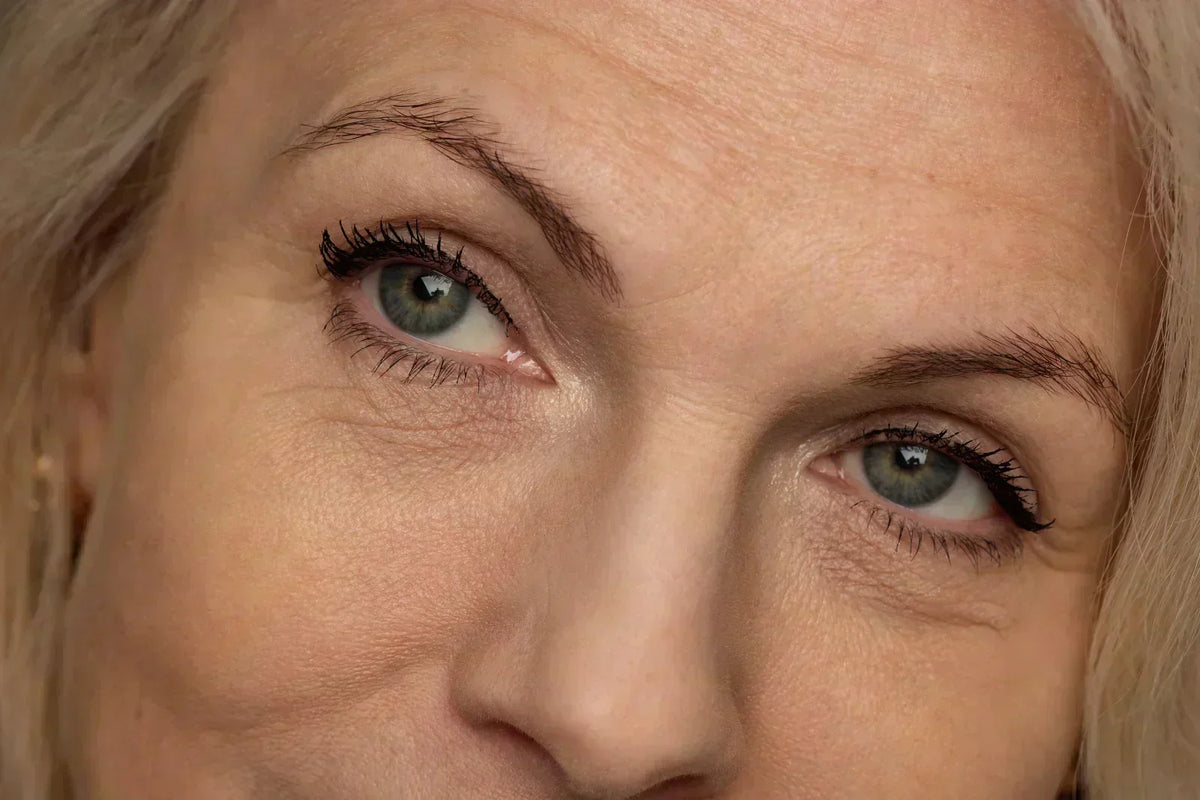
Expression lines and age-related wrinkles most commonly appear on the forehead and between the eyebrows, as well as at the outer corners of the eyes, where crow’s feet form. Around the mouth and in the nasolabial area, they also tend to become noticeable in people with active facial expressions. With age, creases may also appear on the neck, including the so-called Venus rings.
What causes facial wrinkles?
Understanding what causes facial wrinkles is already half the battle when it comes to keeping skin firm and fresh-looking for as long as possible. It also makes it easier to create an effective prevention plan and a realistic at-home skincare strategy.
Age-related skin changes
After the age of 30, the natural production of collagen, elastin, and hyaluronic acid decreases significantly. At the same time, slower regeneration and dehydration begin to affect the skin. As a result, changes in facial contours and overall skin condition become more visible.
Active facial expressions
People with active facial expressions are more likely to deal with problems such as expression lines. Barely visible in youth, these lines can gradually become permanent. This is caused by repeated tension in the facial muscles used most often, combined with age-related skin changes. One of the simplest and at the same time most difficult answers to how to prevent wrinkles on the face is to be mindful of facial habits.
Photoaging
As much as we may enjoy the sun, it is far less gentle on the skin than it seems. According to dermatological research, ultraviolet radiation can damage collagen fibers and may also trigger minor inflammatory processes in the skin.
Without regular SPF 30–50 protection, visible signs of aging tend to appear sooner. In addition to photoaging, excessive UV exposure is considered one of the risk factors associated with melanoma. That is why sunscreen is one of the key tools for preventing photodamage and an essential part of any anti-aging skincare routine.
Lack of hydration and improper care
Well-hydrated skin tends to maintain elasticity longer, fine lines on the face appear less often, and wrinkles do not form as quickly. Supporting the skin barrier requires a comprehensive approach: gentle cleansing, proper hydration, and regular use of moisturizing products. This can help delay the appearance of fine lines and early creasing.
Lifestyle
The way we live has a direct impact on how the skin looks, and this becomes increasingly noticeable over time.
- Both fine lines and deep wrinkles on the face can be associated with poor sleep and stress. Under these conditions, cortisol levels rise, which can slow down regeneration.
- Diet is often an overlooked risk factor, but it matters as well. The skin loses elasticity when the body is dehydrated or when weight fluctuates sharply. Excess sugar intake may contribute to glycation, a process in which collagen fibers become stiffer and more fragile.
- Smoking and alcohol also do not support a youthful-looking complexion: expression lines become more noticeable, the skin suffers from reduced oxygen supply, and blood vessels constrict.
Individual factors
Genetics, skin type, facial anatomy, and hormonal balance also determine how strongly the skin is affected by aging and how well it can maintain a youthful, fresh appearance.
What types of facial wrinkles are there?
In skincare and aesthetic practice, facial wrinkles are usually divided into several types.
By depth
Depending on how deep the creases are, they may be:
- Superficial or epidermal. These are barely visible and resemble a fine mesh.
- Medium-depth or dermal. These creases form in the middle layers of the skin and are more noticeable visually.
- Deep and persistent. In such cases, deeper underlying structures are involved.
By mechanism of appearance
- Expression-related changes are linked to muscle movement and active facial expressions.
- Age-related creases are caused by slower regeneration and decreased collagen production.
- Static wrinkles appear due to habitual facial expressions, lifestyle factors, and other long-term influences. They remain visible even when the face is fully relaxed, as in the case of nasolabial folds or neck lines.
- Gravitational folds develop as a result of ptosis, or the downward sagging of soft tissues. This is when the face visually loses definition in its contours.
By area
Depending on where the creases form, cosmetologists usually divide them into the following categories:
- Horizontal forehead lines;
- Vertical frown lines between the eyebrows;
- Small crow’s feet around the eyes, especially at the outer corners;
- Nasolabial folds;
- Fine lines or deeper lines around the lips.
Is it possible to get rid of facial wrinkles completely?

There are many ways people try to figure out how to get rid of wrinkles on the face, but no at-home method works with 100% effectiveness. It is not possible to completely eliminate deep wrinkles on the face using skincare products, cosmetics, and lifestyle correction alone. However, a consistent approach can still help:
- Smooth superficial wrinkles;
- Make medium-depth creases less pronounced;
- Slow down the development of new wrinkles;
- Improve skin firmness and elasticity;
- Refine facial contours and make gravitational folds less visible.
The effectiveness of everything that helps smooth facial wrinkles depends on the art of “small steps” performed consistently. A daily anti-aging skincare routine works better than occasional radical rejuvenation attempts. Results also depend on how deep the wrinkles already are, as well as on the overall condition of the skin and the body as a whole.
It is important to note that it is entirely realistic to improve skin texture, enhance turgor, support renewal processes, and give the face a fresher, more well-cared-for look. However, it does require regular effort and consistency, step by step.
How to get rid of wrinkles at home?

Even if not completely, it is easier to reduce wrinkles with a regular routine and to understand how to get rid of wrinkles at home in a realistic way. It is important to understand from the beginning that effectiveness depends on consistency and a systematic approach that combines skincare, protection, massage, device-based home care, adjustments to diet and sleep, and other supportive methods.
Basic care without which anti-aging does not work

You can try one method after another when looking for how to get rid of wrinkles, including expression lines and age-related facial wrinkles, but none of them will work well without a regular basic routine. It includes several essential steps.
Gentle cleansing
Use foams, gels, and other gentle cleansers to remove makeup and wash the face without over-stripping the skin.
Moisturizer
Hydration helps the skin feel more comfortable and can make fine lines on the face look less noticeable.
Serums as needed
Depending on skin type, current condition, and accompanying concerns, serums with different active ingredients may be selected. They can hydrate the skin, even out the tone, and support firmness.
SPF every day
Using SPF is especially important on sunny days. Ultraviolet radiation can damage collagen, contribute to photoaging, and become one of the main reasons why wrinkles appear prematurely. That is why sunscreen is a basic element of care for most people.
Active ingredients in wrinkle care

When wondering how to reduce wrinkles on the face, dermatologists and cosmetologists rely on a variety of products. Their active ingredients usually include one or more of the following:
- Hyaluronic acid helps retain moisture in the skin and improves its appearance.
- Peptides are often included in skincare for fine lines and wrinkles to support a firmer-looking complexion.
- Antioxidants help protect the skin from environmental stressors and pollutants.
- Niacinamide is often added to anti-aging products because it may help reduce the visibility of fine lines.
- Retinoids/retinol are used to address various skin concerns. They are best introduced after consulting a specialist, especially if the skin is sensitive.
Massage and at-home techniques

You can partially reduce visible age-related changes in the face with exercises, massage, lymphatic drainage techniques, and forms of face fitness. This is where facial workouts for wrinkles are often mentioned. At the same time, each of these methods should be approached with caution.
A few important nuances:
- These practices must be regular. It is impossible to notice meaningful results after just one massage.
- Face fitness does not have a strong evidence base, but many people find it useful for improving the look of facial contours.
- At-home massage should be done very gently. It is important not to press too hard and not to stretch the skin. All movements should be performed upward with the fingers or with massage tools such as gua sha scrapers, rollers, and similar accessories.
Gentle stimulation improves microcirculation, reduces puffiness, and helps the face look fresher. Indirectly, this is one of the things that may help smooth facial wrinkles, especially superficial ones. Some people also include facial patches for wrinkles in their at-home routine as an additional supportive step, although they work best as a complement rather than a stand-alone solution.
Device-based home care for wrinkles
The line between professional facial treatments for wrinkles and at-home care is becoming more blurred. Often, creams alone are not enough for those looking for how to get rid of wrinkles on the face more effectively. Even so, home devices can be used to work on skin tone, density, and firmness, which may help reduce the appearance of creases.

In recent years, cosmetologists have increasingly suggested using various devices at home to make care more comprehensive and effective. One example is the Japanese skincare device Clione Fit 2.0, which can be viewed as one of the available at-home options. It is used together with Plamine serum. This type of care combines several technologies at once: EMS, MFIP, RF, and LED therapy, allowing multiple technologies to work within one routine.
- Electrical muscle stimulation (EMS) may help support muscle tone, which can make the face look more lifted.
- Radiofrequency lifting (RF) may support processes associated with maintaining skin structure.
- MFIP and LED therapy may enhance the penetration of skincare products, according to the manufacturer.
With regular use, about 2–3 times a week for 10 minutes, many users report an improvement in the appearance of the skin. This is based on user experience and should not be considered a medical claim. It is also important to remember that device-based home care does not replace cleansing or a basic anti-aging skincare routine. It only complements them and works best as part of a consistent long-term routine. The effectiveness of such devices may vary depending on individual skin characteristics.
Which professional procedures can help reduce wrinkles?

Sometimes, at-home methods of how to smooth facial wrinkles are not enough. In such cases, visiting a qualified cosmetologist or dermatologist may lead to more visible and longer-lasting results. In a professional setting, the following facial treatments for wrinkles are commonly used, especially for people concerned about deep wrinkles on the face:
- Biorevitalization - hyaluronic acid injections for deep hydration.
- Device-based procedures to improve circulation, tone, and firmness.
- RF methods - bipolar or tripolar approaches aimed at stimulating fibroblast activity.
- Laser resurfacing for post-acne marks, scars, and pigmentation issues.
- Chemical peels that improve texture and help renew the surface layer of the epidermis.
- Filler injections to fill folds and creases.
- Botulinum therapy, which cosmetologists may recommend for pronounced expression lines.
- Facial contour correction, when indicated by a specialist.
All of the procedures listed above should be prescribed only by a professional after a detailed consultation and skin assessment. It is also important to combine any professional intervention with good home care. This helps the results last longer and look more noticeable.
What works better for wrinkles: home care or professional treatments?

The right solution is not to choose only one answer to how to get rid of wrinkles. The key lies in combining methods according to individual needs and professional recommendations.
- Regular home care and a daily routine are necessary for everyone, both women and men.
- Cosmetic procedures, injections, and other interventions are used only when indicated by a dermatologist or qualified cosmetologist.
The most effective approach is a comprehensive one that takes into account skin type, genetics, age, wrinkle depth, and expectations. Budget also matters: not everyone is comfortable with costly injections that need to be repeated every few months. At the same time, good home care can still deliver decent, even if not perfect, results.
How to prevent new wrinkles from appearing
Prevention is always better than treatment, and this principle applies in dermatology as well. It is much easier to work on what causes facial wrinkles than to deal with deeper lines later. So let us look at what options are available for prevention.
Daily SPF
SPF 30–50 is recommended in all weather conditions, but especially on sunny days. A sunscreen helps protect the skin from ultraviolet exposure.
Regular hydration
Hydration should be both external and internal. Drink enough water and use moisturizers and serums selected according to your skin type.
Gentle cleansing
Frequent at-home peels and other aggressive cleansing methods can negatively affect the skin. It is better to choose milder options, such as enzyme powder combined with a cleansing oil, foaming cleansers, and other gentle products.
Control of facial habits
Creases on the forehead and between the brows often form because of the habit of squinting or frowning. For those interested in how to prevent wrinkles on the face, paying attention to these habits can be helpful.
Sleep, nutrition, water, and avoiding smoking
Getting at least 8 hours of sleep, following a balanced diet, staying hydrated, and avoiding smoking and alcohol are some of the most effective things you can do not only for your skin, but for your overall health. Slowing down the formation of new creases is only one visible reflection of better general well-being.
Regular anti-aging care at home
Skincare should be done little by little, but every day. The use of home devices, such as Clione Fit 2.0 with Plamine serum, can complement creams, facial patches for wrinkles, face fitness practices, and massage. Device-based home care may be helpful not only for visually softening superficial lines, but also for supporting skin tone and helping the tissues better withstand age-related changes.
FAQ
Can you get rid of facial wrinkles at home?
There are many ways people try to learn how to get rid of wrinkles at home. In most cases, the best approach is a comprehensive one: consistent skincare, sunscreen, device-based care, quality sleep, good nutrition, and avoiding harmful habits.
What helps with expression lines?
Since expression lines are caused by active facial movement, one preventive step is to try not to frown or squint excessively. If the lines are already visible, the same strategies used for age-related wrinkles may help: an anti-aging skincare routine, device-based home care, massage, and professional facial treatments for wrinkles.
How do you reduce forehead wrinkles?
Forehead lines can become quite deep, so a combination of methods usually works best. This may include controlling facial tension, using EMS technology, facial massage, facial exercises for wrinkles, and intensive hydration.
How can you reduce wrinkles around the eyes?
Crow’s feet can be addressed not only in a cosmetic clinic. A lot can be done at home: using creams and serums with hyaluronic acid, wearing SPF on sunny days, and protecting the delicate eye area. Light massage and under-eye patches may also be useful for supporting skin tone.
What helps with nasolabial folds?
A comprehensive approach works best: using products with retinol or peptides that may help improve skin density and firmness, doing face fitness that targets the mid-face area, and complementing the routine with devices such as Clione Fit 2.0.
At what age should anti-wrinkle care begin?
Consistent skincare is important from a young age, but a stronger focus on anti-aging care and wrinkle prevention usually begins around age 25–30. As early as possible, it is worth paying attention to hydration, peptide serums, and supportive at-home methods.
Can device-based skincare be used at home?
Clione Fit 2.0 used with Plamine serum is one example of a home skincare device. It is one option for people looking for ways to make facial wrinkles less noticeable at home.
Conclusion
The formation of wrinkles is a completely natural process, and even regular care cannot prevent them entirely. Even so, it is possible to influence how quickly the skin ages and how pronounced wrinkles become. A comprehensive approach to skincare, an anti-aging skincare routine, and lifestyle adjustments can help better manage visible facial wrinkles and support slower skin aging.
Modern solutions, including professional procedures and device-based home care, may help improve skin texture. Clione Fit 2.0 with Plamine serum can be considered one of the tools within an anti-aging skincare routine. It may be a suitable option for those who want to support skin health and firmness and are trying to understand how to get rid of wrinkles on the face at home without relying on aggressive methods.
No product delivers instant results, and smoothing out creases in a single day is unrealistic. Still, there is a lot that can be done to help the skin look fresher, healthier, and more cared for even at a mature age.


